The problem nobody talks about
Science can predict what an observer will measure to ten decimal places. It cannot tell you what an observer is.
That is not a footnote. It is a hole at the center of our picture of reality.
In relativity, the observer is a set of rulers and clocks. In quantum mechanics, observation is essential, and nobody can say what it is. In neuroscience, after a century of brilliant work, not one theory explains a single conscious experience. Not the redness of red. Not the taste of salt. Not the plain fact that it feels like something to be you.
Meanwhile, the people building our future are asking very big questions:
- Are we living in a simulation?
- Are machines waking up?
- Why is the universe so silent? Where is everybody?
- Can we carry consciousness to the stars?
Hundreds of billions of dollars, and the direction of this century, ride on the answers. And the smartest people alive appear to be stuck.
What if they are stuck for the same reason? What if they are asking the right questions with the wrong map?
This essay is about the map. I'm not a scientist. I'm a part-time ski instructor who lives up an Alpine valley. I'll simplify. I won't exaggerate. Everything here is a what if, because nobody knows yet. But if the answer is yes, it may be the biggest shift in how we understand reality since we learned the Earth goes around the Sun.
It starts with a very small animal.
The ladybug
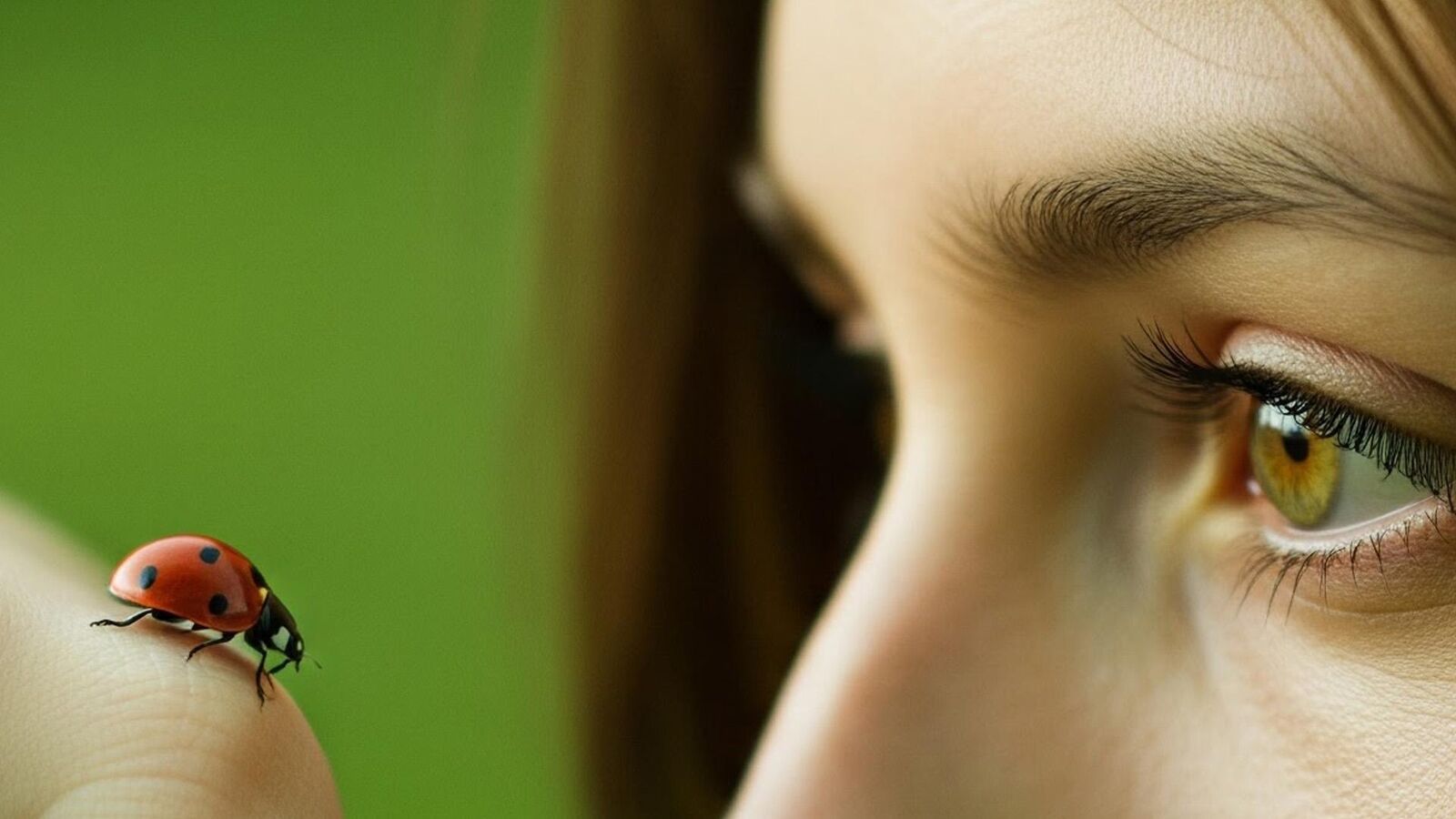
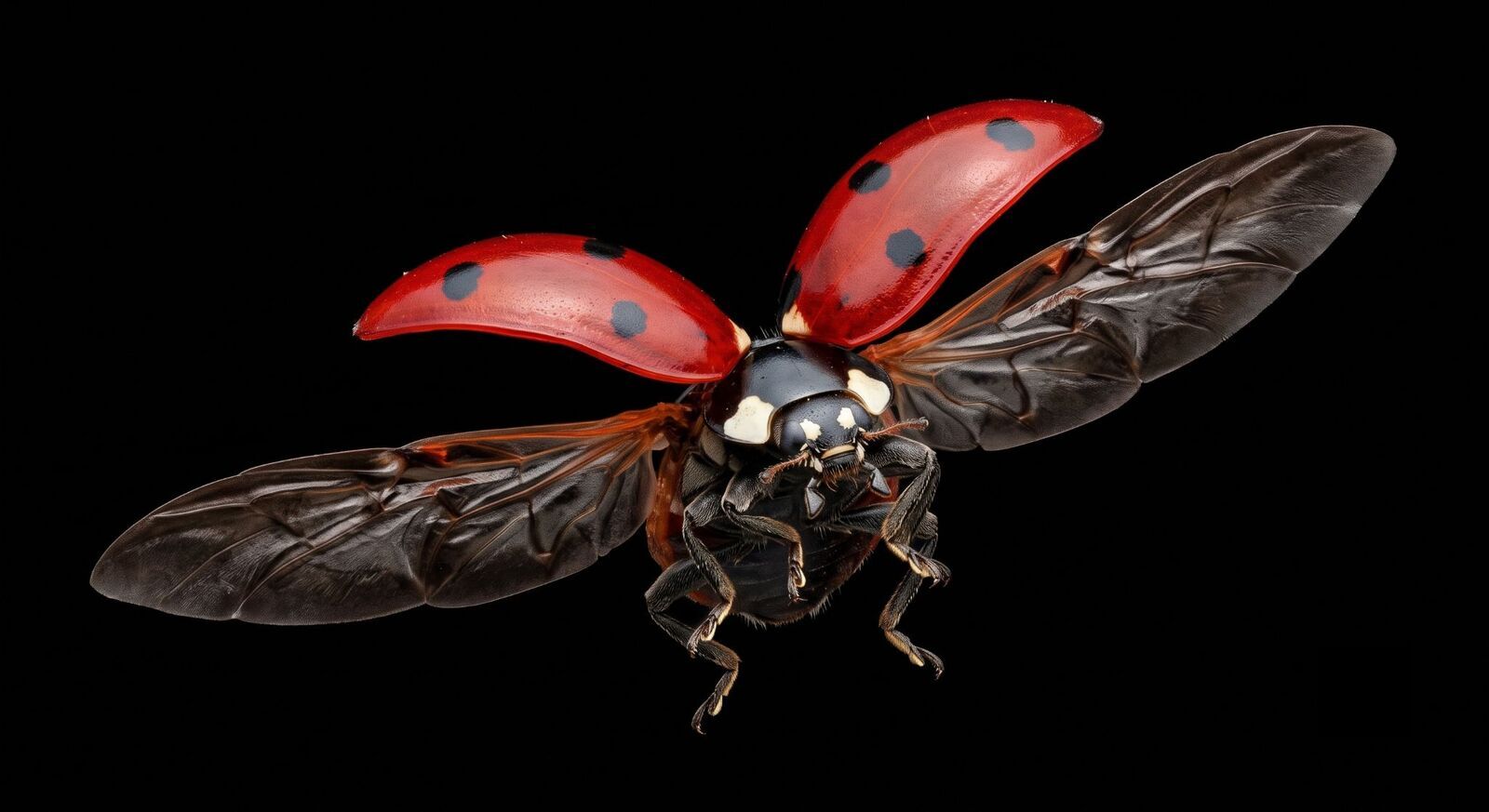
A ladybug lands on your hand. You lift her up to your face.
From where you stand, the situation is obvious. You fill the ladybug's surroundings, support her physical body, and occupy the space immediately before her.
Now look from where she stands.
She stands on a landscape of chemical scent-trails, heat gradients, and microscopic ridges. She walks, turns, opens her wings and flies off. Everything she did worked.
At no point did she meet you.
Not your face. Not your mind. Not the fact that she was standing on a person at all. The most important fact about her situation does not exist in her world. There is no place in it where a human being could appear.
She is not broken. She is a perfect ladybug.
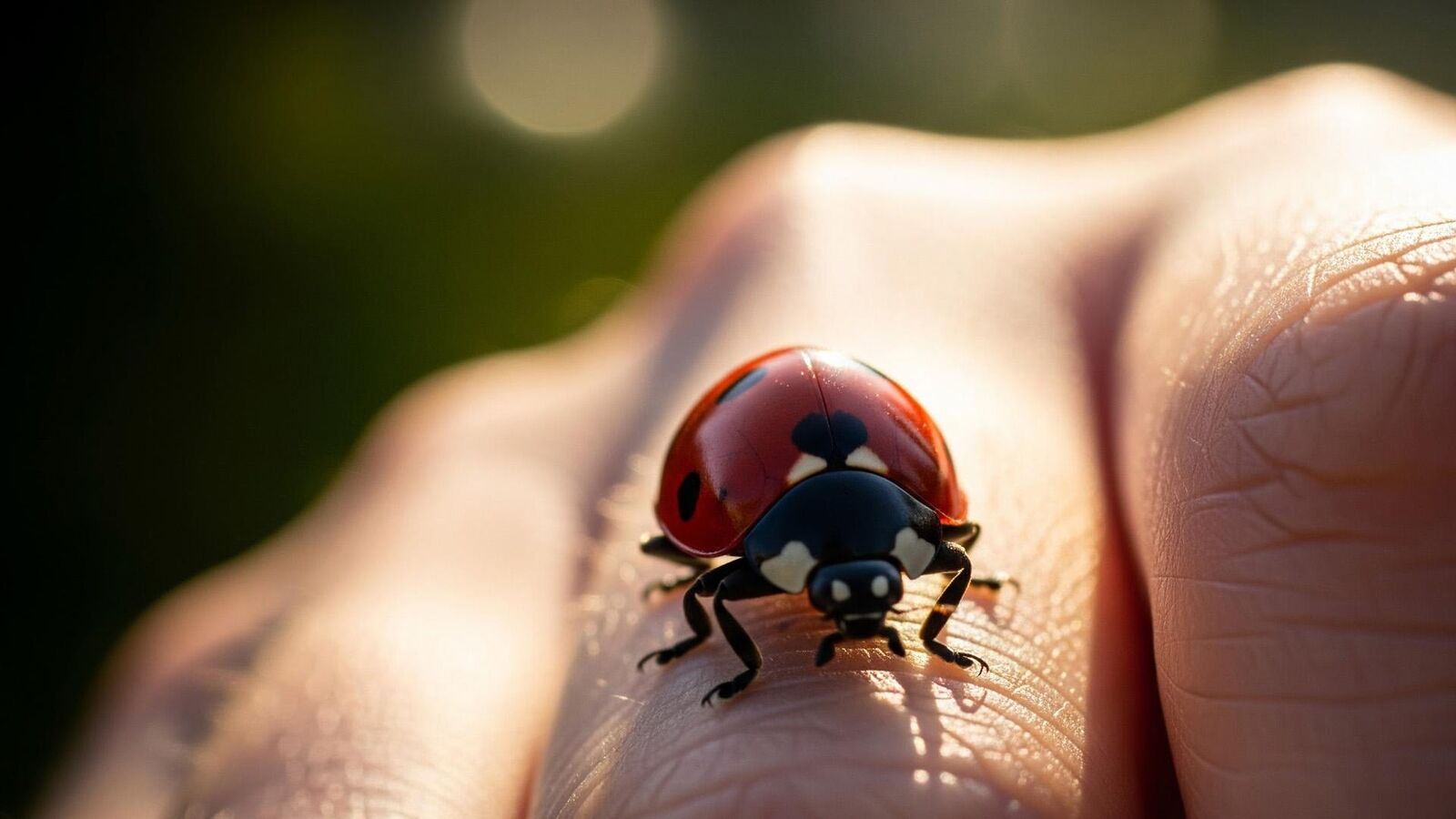
And she is not limited by accident. She is built that way. Every detail an animal senses costs energy and time. Evolution has shaped her not to perceive you: taking in your full complexity would overwhelm her nervous system, and a ladybug that tried would lose the race to survive. She navigates a drastically simplified sensory interface, tuned for survival and reproduction, not for truth.
What survives is not the creature that sees most truly. It is the creature that sees most usefully.
Now imagine a group of ladybug scientists. Laboratories. Instruments. Centuries of research. They measure every gradient of warmth and every vibration. Their physics is precise. Their predictions never fail. They fill entire libraries and hard drives.
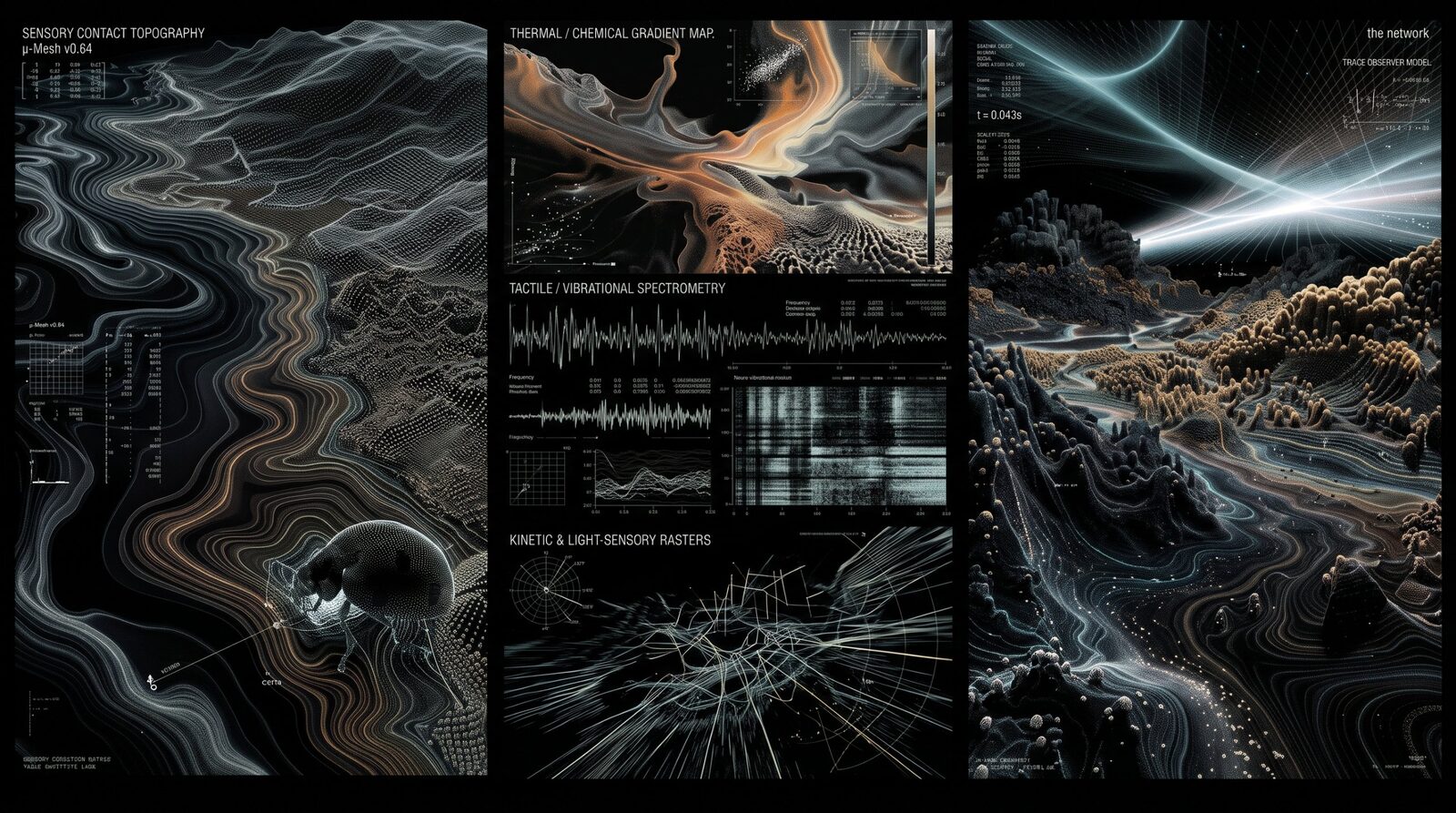
Not one book in those libraries contains the word "human."
Their science isn't wrong. It is perfectly accurate about the world their senses give them. It just never had a chance of discovering what they were standing on.
Predicting your world perfectly is not the same as knowing what your world is.
The membrane
The ladybug's limits are easy to see. Ours are much harder to admit.
Yet maybe we are in the same position. She and we each live inside an interface shaped by evolution, filtering out almost all of reality's complexity so that we can survive. If her world is so hard for us to imagine, why assume ours shows us existence as it is?
Without ever saying so, we treat the human picture of the world as the real one: the original, the objective truth, with hers as a defective copy.
Why would that be?
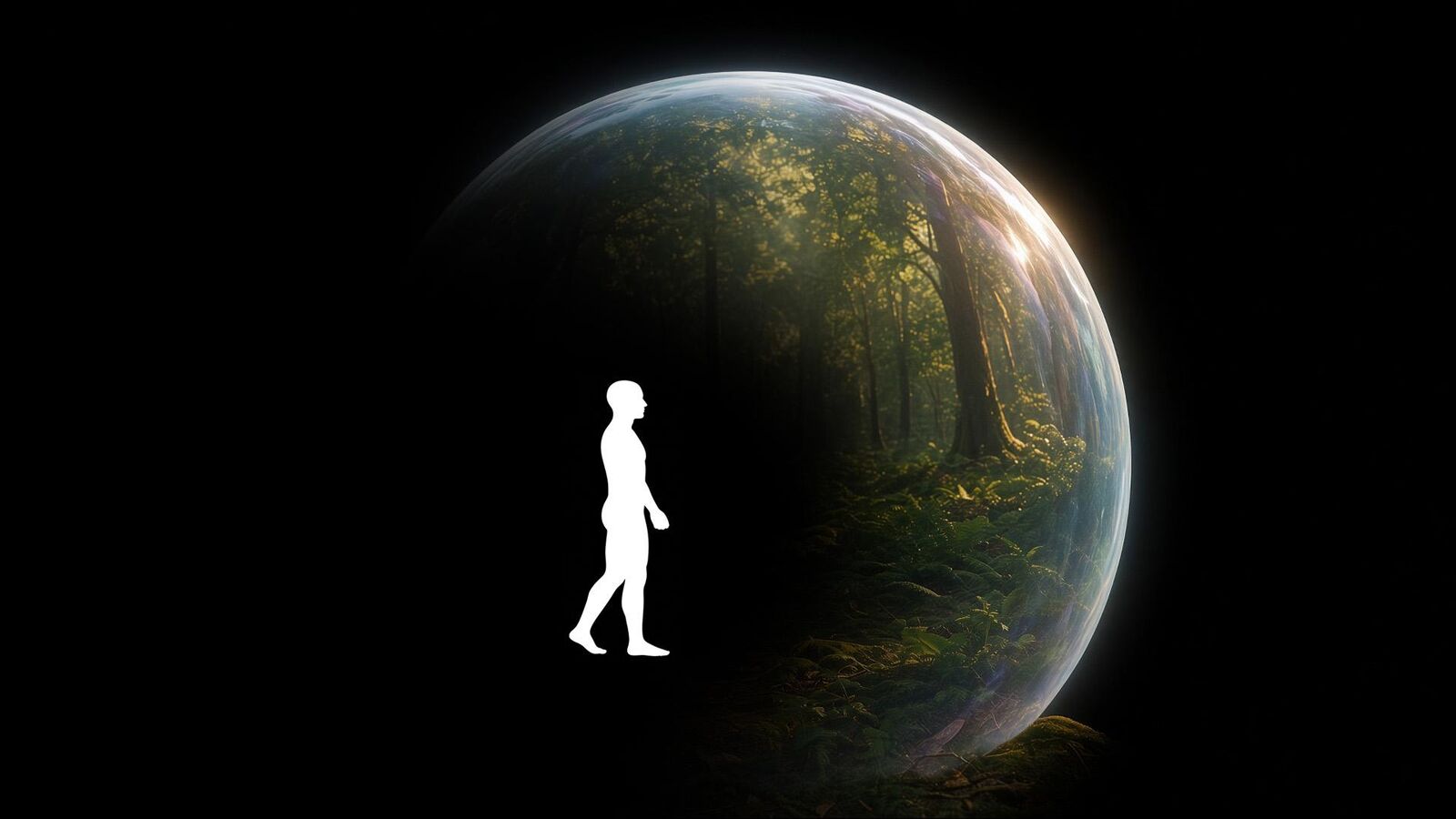
Earth holds millions of species. Every one of them lives inside its own bubble of perception, shaped by evolution for its own survival. The bat lives in echoes. The bee sees ultraviolet. Each perceptual membrane feels complete from the inside.
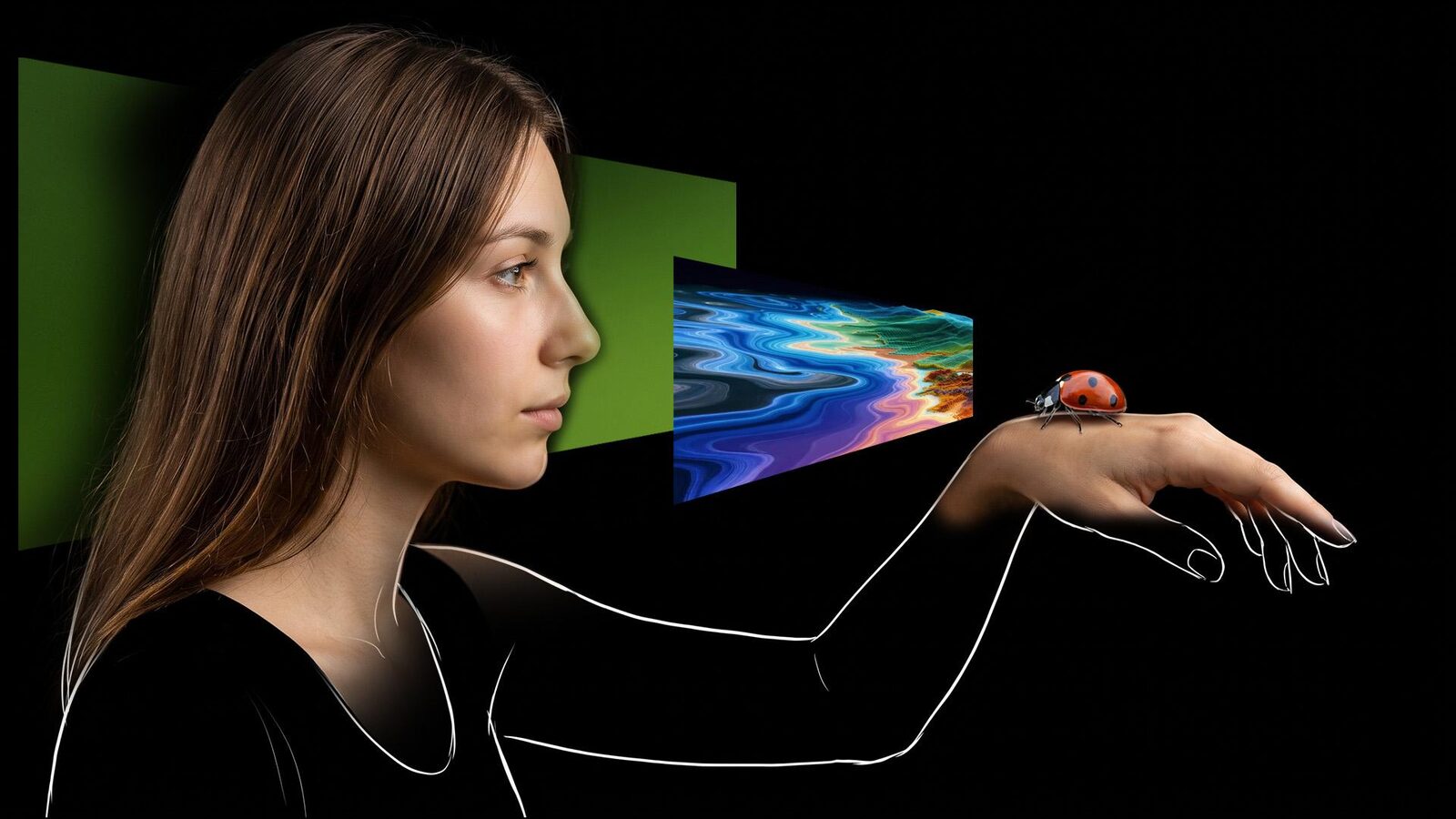
Why would exactly one species be the exception? Why would evolution, which builds every other creature for usefulness rather than truth, make a special case for us?
There's no reason it would.
Think of the onboard computer navigating a self-driving car.
Engineers didn't build it to understand the truth of the highway. They tuned it for ruthless efficiency: maximize driving performance, avoid collision, and burn as little battery as possible.
If that machine tried to compute raw reality, every photon, rust fleck, and swirl of wind, its processors would choke on the data and the car would crash. It navigates safely precisely because it throws 99% of the universe away, collapsing a staggering chaos into stripped-down vectors and collision paths.
A perceptual system does more than receive signals: it organizes a world in which a creature can act. What if our senses are not a window onto what is really there, but an energy-budgeted hack, built solely to keep us alive?
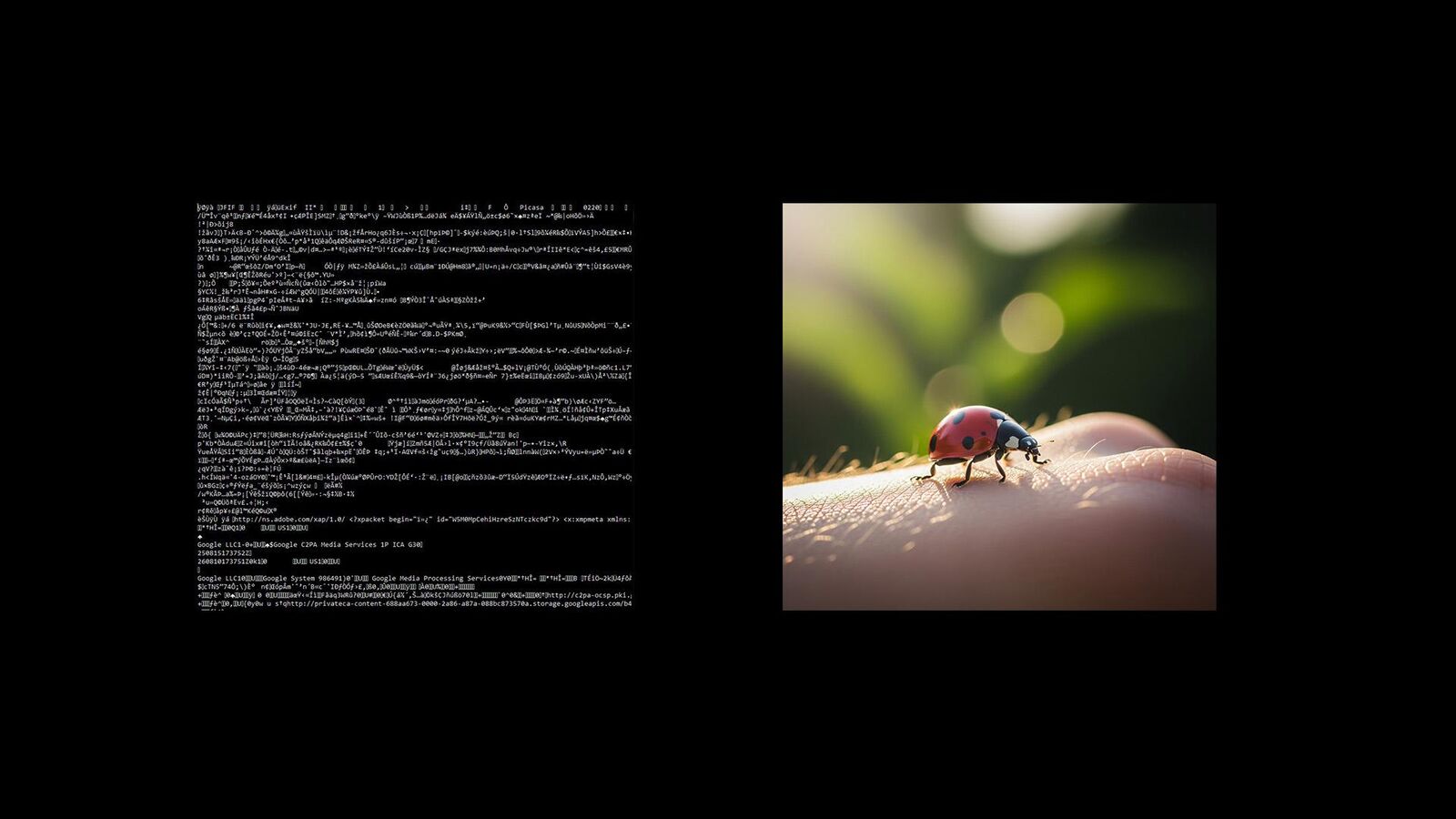
Open a photo of a ladybug and you see a ladybug: a shape, edges, red. Open the same file in a text editor and you see an endless river of characters. Nothing in the data says where the ladybug ends. The edges come from the software reading it. The image and its structure belong to the observer, not to what is there.
In the film Predator, the alien hunter sees in heat. Cover yourself in cold mud and you disappear from its world while standing right in front of it. You didn't go anywhere. You fell outside its way of seeing.
That is the membrane. Every observer lives inside one: the ladybug, the bat, the alien, and us. And a membrane never tells you what it leaves out. Everything you can perceive appears inside it, so it feels like everything there is.
So here is the question everything turns on:
What if we are the ladybug?
What if the physical universe, from the Big Bang to the galaxies to the body you are sitting in, is what reality looks like from inside the human membrane, and not what reality is?
It's a wild question. Until recently, there was no way to treat it as science.
The team taking it on
The Trace Institute is a recently launched nonprofit research team built to turn that question into mathematics. It is led by Donald Hoffman, a cognitive scientist and professor emeritus at the University of California, Irvine, who has spent four decades on the mathematics of perception. Around him: a team of extraordinary mathematicians, physicists, cosmologists, philosophers and AI engineers.
The ladybug and the membrane are common sense. Here is what they turned into.
It's not just an intuition. It's a theorem.
Hoffman, Prakash and colleagues proved what they call Fitness Beats Truth. In mathematical models of evolution by natural selection, perception tuned to what is useful beats perception tuned to what is true. And the more complex the world, the closer to zero the chances that seeing the truth ever wins.
Evolution does not build senses to show reality as it is. It builds them to keep you alive. That applies to the ladybug, and it applies to us.
From this, Hoffman built the Interface Theory of Perception: space, time and physical objects are best understood as a species-specific interface, a “headset,” not as reality itself. His favorite analogy is the desktop on your computer. The blue folder icon is useful: drag it to the trash and the file is gone. But the file is not blue, not rectangular, and not in the corner of anything. The icon hides the circuits and voltages, and that is exactly why it works. Objects in space and time, Hoffman argues, are icons of that kind.
Then comes the boldest step. If the physical world is the interface, what is behind it? Hoffman's proposal: not dead matter, but consciousness. A vast network of interacting conscious observers, which he calls conscious agents. The physical universe is what that network looks like through a headset like ours.
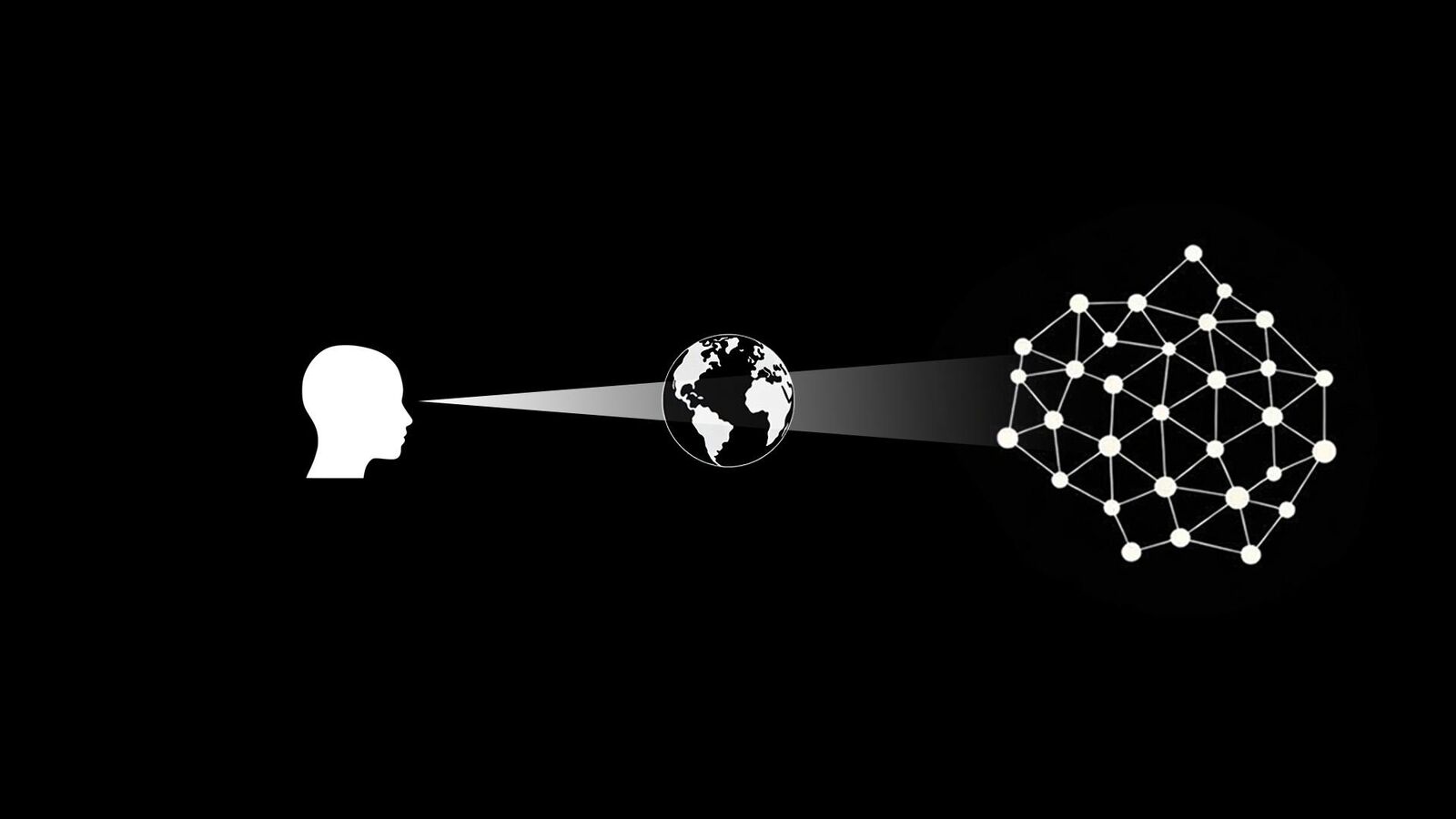
That's a big claim. The question is whether it can be made precise enough to test.
Three lights
Three lights blink in a fixed loop: red, green, blue, red, green, blue, forever.
Now imagine our ladybug watching them, and say she cannot see blue. Not because it's switched off, but because blue is outside her world, the way you are.
Her law: green is always followed by red.
She sees red, then green. Then nothing she can notice. Then red, then green again.
She studies her world for years and writes down its laws. Red is always followed by green. Green is always followed by red. Her laws are precise. They never fail. And the second one is not true of the system at all. Green is never followed by red. It is followed by blue. Her law is real, reliable and useful, and it was created entirely by what she can't see.
And notice: for every three blinks of the full system, her world ticks twice. Her clock runs slower than the clock of the whole.
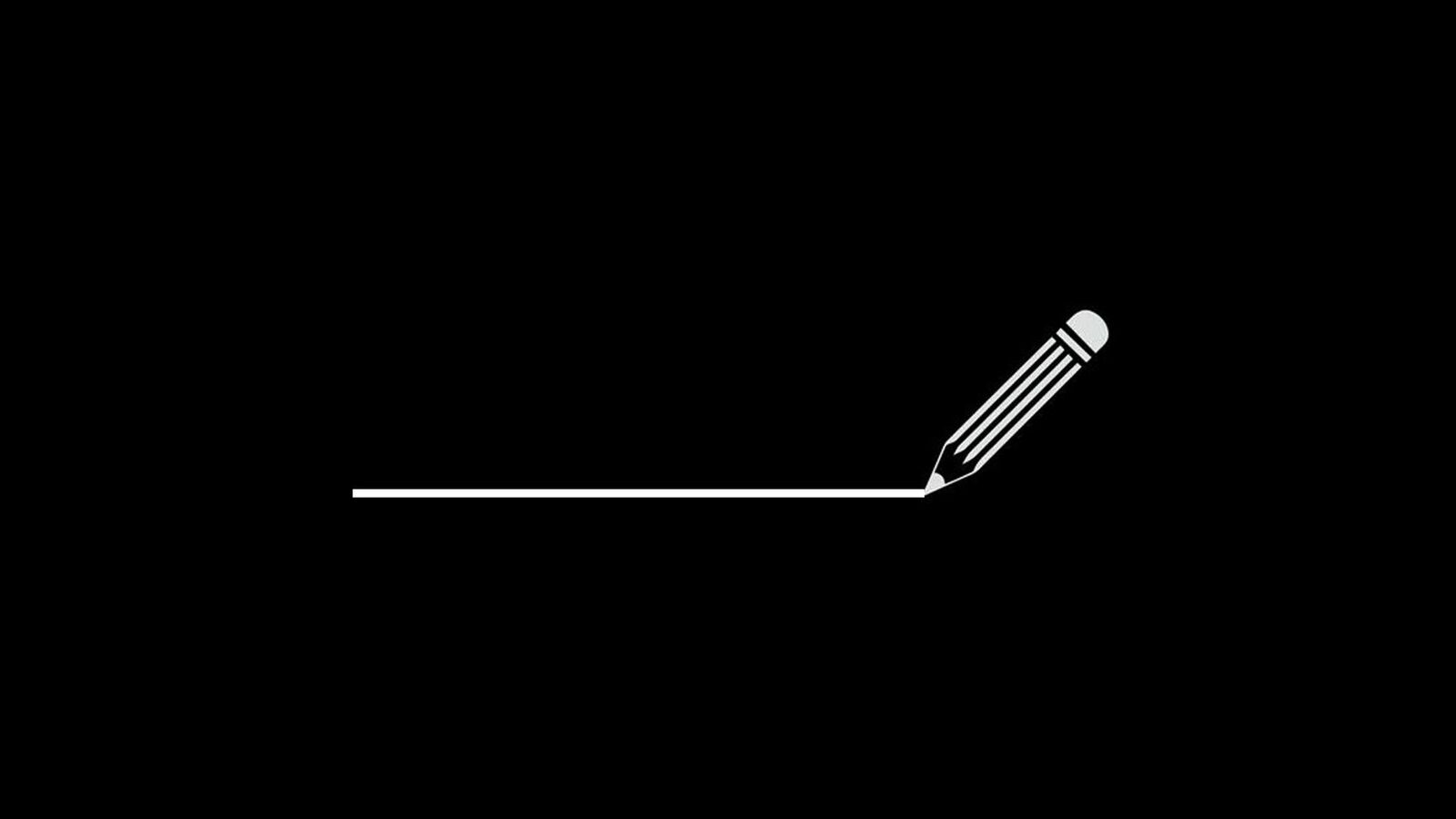
That is a trace: the rules you observe when you can only see part of a larger process. A ski track in the snow is the trace of a skier's descent. Her red-green law is a trace of a red-green-blue system. The Trace Institute's question is whether the laws of physics are a trace too.
Putting the observer into the mathematics
The team's approach is to do what physics never has: start with the observer.
- Consciousness is modeled in the simplest possible way, as a stream of experiences: this experience now, that one probably next.
- Observation is modeled as tracing: attending to part of that stream, and living by the rules it produces, exactly like the ladybug and the three lights.
From these ingredients the team has already built a precise logic of observation. It states mathematically when one observer observes another, and how observation turns into belief. In it, an observer is never outside what it observes. It is part of it.
Then the ambition. If our world is a trace, the physics we know has to come out of this mathematics: space and time, relativity's slowing clocks, particles, mass, the quantum wave. The team has set this out as eight conjectures, eight precise mathematical statements that, if proved, would derive the foundations of physics from the dynamics of conscious observers.
What's proved, and what isn't
Let's be exact, because it matters.
That is what makes this different from every mystic and every armchair theory that came before it. The claim can lose.
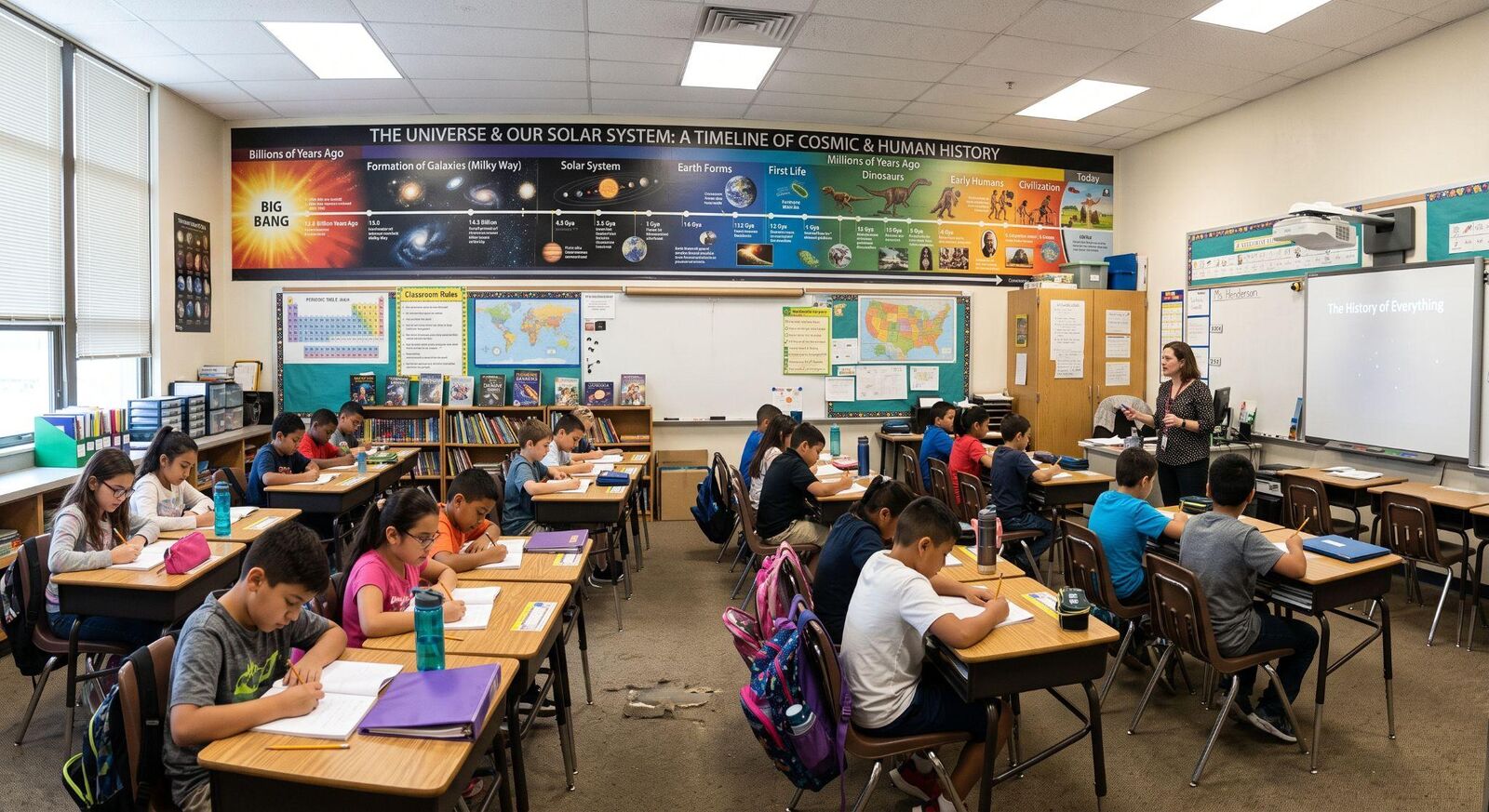
The Great Inversion
You know the story on that banner on the classroom wall. We all learned it in school.
13.8 billion years ago, the universe began. Most of us picture it as an explosion: a bomb going off in empty space, flinging galaxies, stars and planets outward like debris. (Physicists will tell you even that picture is wrong.) On one of them, chemistry became biology. Life grew more complex. Very late, almost at the last second, brains appeared. And somewhere inside them, nobody knows how, experience switched on. The lights came on in a universe that had been dark.
That is materialism: the belief that matter is the bottom layer of reality, and that consciousness is something matter eventually produces. Not the love of shopping. It is the operating system of the modern world, so familiar that it feels like an observation instead of an assumption.
What if it is upside down?
What if consciousness isn't the last thing on the timeline, but what the whole timeline traces back to? What if a network of conscious observers is fundamental, and space, time, matter and the entire history of the physical universe are how that network appears through a human headset? The world doesn't produce observers. Observers, interacting, produce the appearance of a world.
It wouldn't be the first time we got reality upside down. For thousands of years it was obvious that the Sun goes around the Earth. You could watch it happen every day. For a long time it was obvious the Earth was flat. Both times, the mistake wasn't stupidity. It was trusting the view from where we stand. Because it looks that way.
Notice what the old picture had in common: it made us the center of everything. The Sun, the stars, the whole sky turned around us. Science has been dismantling that sense of importance ever since. Copernicus moved us off the center of the cosmos. Darwin made us one branch of the tree of life. Astronomy made our Sun one star among hundreds of billions. Each time it was humbling, and each time it opened a bigger universe. Perhaps one last piece of that old pride is still standing: the belief that the world as humans see it is the world as it is.
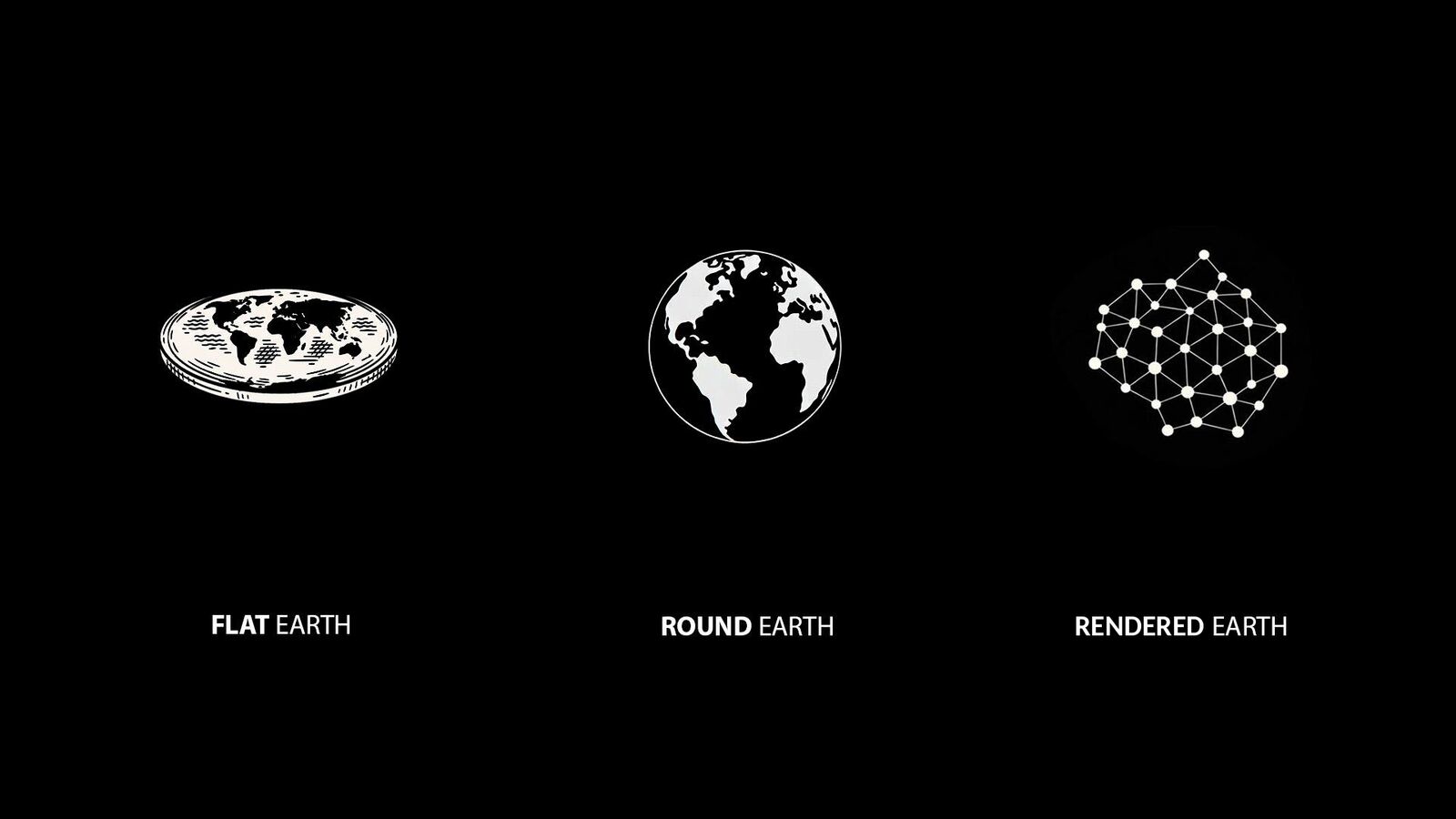
The first Earth was flat. The second is round, and it stays round: Trace doesn't dispute the measurements. The third Earth goes one step further. In this view, there is no Earth out there, waiting to be seen. What exists is a network of conscious agents. Look at it through the settings and constraints of a human observer, and the Earth appears. The globe is a species-specific object, produced by the observer. To a ladybug there is no globe. To another kind of observer there might be something we have no word for. Something real is there. The Earth is how it shows up for us.
If Trace is right, the banner in the classroom isn't wrong. It's incomplete in the deepest way possible: an accurate history of what appears inside our interface, told as if it were the history of everything.
What if, a hundred years from now, materialism looks the way the Sun circling the Earth looks to us today?
What changes if they're right
After Copernicus, the Sun still rose in the east. Nothing in the sky changed. Everything we thought it meant did. The same would happen here. The world would look exactly the same. The questions would not.
Here is the part that sounds insane. If the Trace Institute is right, this one shift opens doors on some of the biggest questions in philosophy, science, technology and spirituality, all at once. Many wouldn't be solved at all. They would dissolve: questions that seemed impossible would simply stop making sense. I know how outrageous that sounds. So don't take my word for it. Follow me with nothing but the common sense we've used so far.
Philosophy
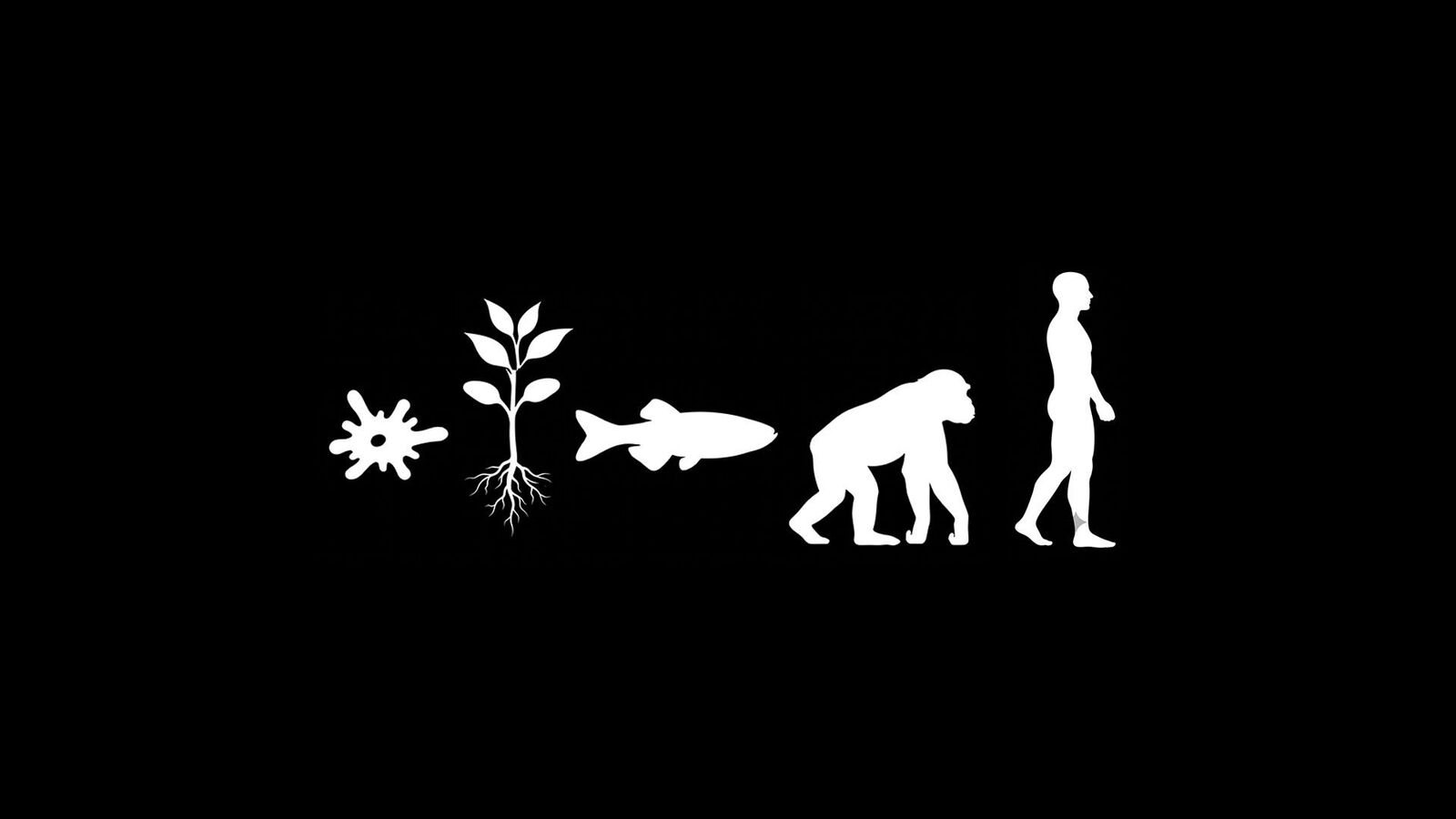
A universe that never had to wake up. In the materialist story, consciousness switched on one day in a universe that had been dark for billions of years. Ask anyone, a friend or a world expert, when it happened, or how much complexity it takes. Nobody can tell you. Under the inversion, there is no moment when the lights came on. The question "how complex does matter have to get before experience appears?" simply goes away.
The so-called hard problem of consciousness. How does matter produce experience? It doesn't have to. If experience comes first, matter is how it looks through our headset. The question becomes how experience produces the appearance of brains, and that one can be written in mathematics.
The delination between living and non-living. We sort the world into living and dead: a rock on one side, a ladybug on the other, plants and viruses somewhere in between. Biology has never found a clean line. There may be no line to find. A rock looks inert because our headset has no reason to render more: nothing in it matters for our survival. Behind every icon, alive-looking or not, is the same network of conscious agents. The scale from dead to living is drawn by the headset, not by reality.
Death. Look at your hands. You are seeing them through the same interface you use for everything else. If the body is only a very limited rendering of what is really there, then the end of the body is the end of a rendering. What ends, exactly? Here I have to be precise. The theory does not promise that your memories or your personality survive. Nothing in the mathematics says what continues. But the question can't stay where materialism left it. If the body was never the whole of what you are, the death of the body cannot settle the question of what you are.
Animals. The perceptual limitation runs both ways. The ladybug can't see the human. And when we look at the ladybug, we don't see her either. We see a dumbed down version: a small red dome with spots. Everything we think we know about an animal, its size, its importance, how intelligent it seems, how much it matters, is a property of that rendering. It tells us how our evolutionary headset renders that being. It tells us nothing about what is actually there. Behind that rendering is activity in the network of conscious agents, and about its true nature we have no insight. A ladybug looks tiny and simple. A whale looks vast. An ape looks almost like us. Those are the headset's verdicts, not reality's. We built a ladder, from insect to ape to human, out of the features our interface happens to show, and then put ourselves at the top. If the theory is right, that ladder reflects our rendering, not them. And there may be countless forms of conscious activity our interface doesn't render at all.
Who we are to each other. We grow up learning that each of us is a separate flicker of awareness in a dead universe. What if separateness is a feature of the interface, not a fact about reality? Think of a generation that grows up knowing that the boundaries between them and other people, other creatures and the world are drawn by the headset. I don't know what that generation would build. I suspect it would be kinder.
Science
The observer enters science. This may be the biggest change of all. For four hundred years, science has studied the world as if it were the bottom layer. If Trace is right, everything science measures, from particles to galaxies, is a trace: what reality looks like through the human interface, and it has to be treated as such. Science doesn't lose a single measurement. It gains the one thing it has always left out: the observer.
Physics gets a foundation. Leading physicists already say that space and time cannot be fundamental: they break down at the smallest scales. Something deeper must lie beneath them, and physics has no account of what it is. Trace proposes one: the dynamics of observers. If that holds, quantum measurement, the most argued-over problem in physics for a century, gets the one thing it has always lacked: a precise definition of what an observer is.
Neuroscience keeps everything and gains a target. The brain doesn't vanish from science. It becomes part of the interface: an icon that tracks experience with great precision, without being where experience comes from. The link between brain activity and experience stops being a mystery to stare at and becomes a mapping to predict.
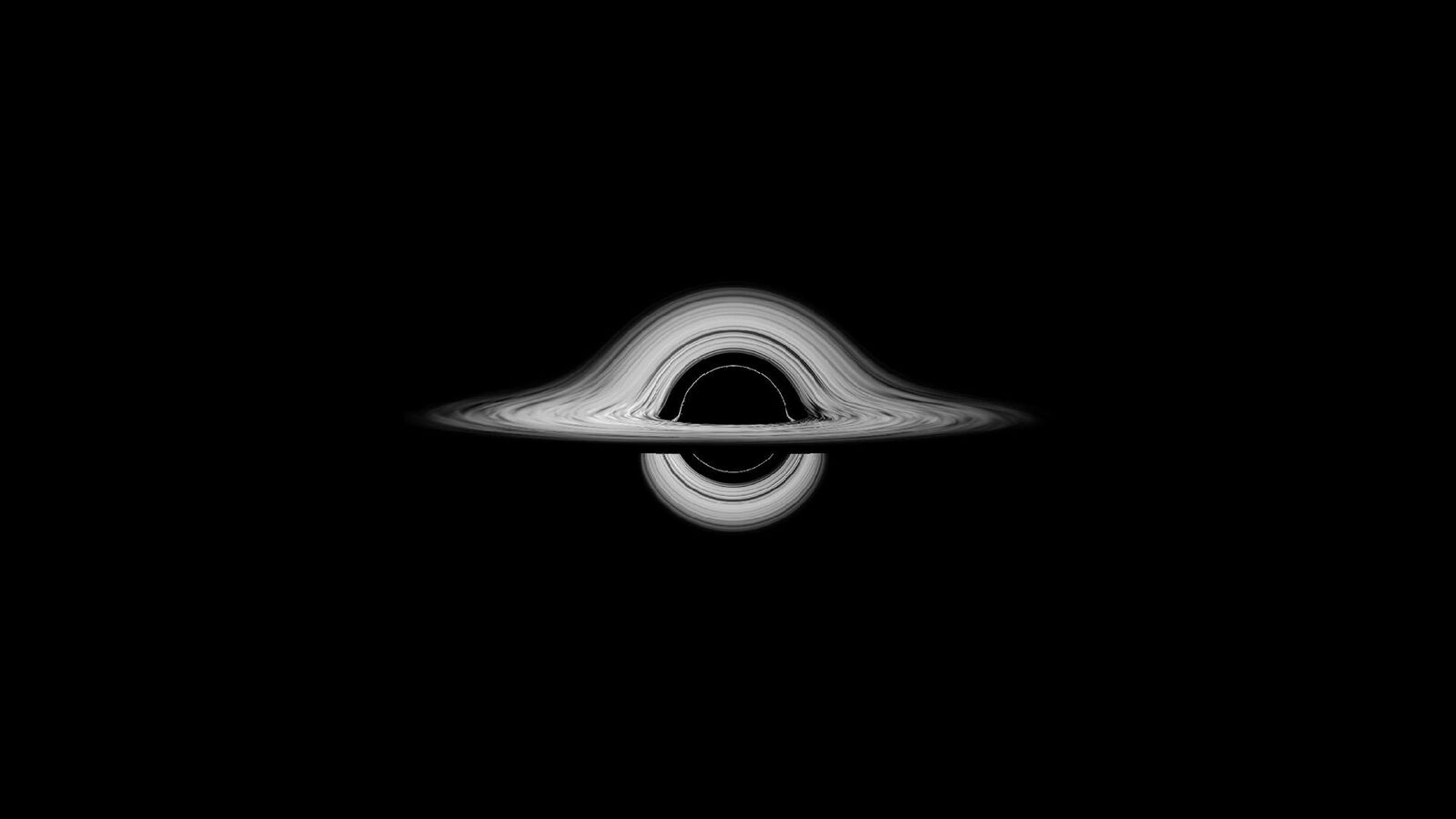
The edges of the map become clues. Black holes. The first instant of the Big Bang. Dark matter and dark energy, which together make up about 95% of the universe and remain unexplained. These are exactly the places where our best theories break. If spacetime is a headset, these are the places where the headset is pushed past its limits, and the best clues to how it is built.
Our ladybug has edges like these too. Her world is sharp only where it needs to be: the leaf under her feet, the aphid just ahead. Further out, it fades. Shapes blur into light and shadow; things loom and vanish for no reason she could ever find. Nothing out there is broken. Her interface simply stops spending detail where survival doesn't need it. A ladybug physicist working at those edges would watch her laws grow strange and her measurements dissolve. What if our black holes, the first instant of time and dark matter are the same: the places where our headset stops rendering, because we were never built to see that far? They don't stop being real. They become signposts.
Psychedelic research. Here is something strange. People who take high doses of DMT, a powerful psychedelic, describe remarkably consistent things. Reality feels more real, not less. Space and time stop behaving. And very often they report meeting beings: intelligent, autonomous, apparently independent of them.
Today's science has one answer: hallucination. The brain, disturbed by a chemical, invents a show.
Maybe. But notice that this answer assumes what Trace questions: that the brain makes experience, so anything strange in experience is the brain malfunctioning.
Now run it through the ladybug. If our everyday world is an interface tuned for survival, then a substance that changes the brain is a substance that changes the interface. What if, for a few minutes, the membrane shifts, and some of what is normally filtered out becomes visible? The theory predicts that there are other conscious agents, possibly far more complex than us, that our space-and-time headset simply cannot display.
What if the universe is teeming with life, and we miss it the way the ladybug misses us? The team's own work points that way. Of all the possible dynamics of conscious agents, they expect only a vanishingly small fraction to ever show up as anything in our space and time. Spacetime would be a rare special case. Most of what exists would never take a body at all.
That is a testable question, and Trace is testing it. Its first collaboration is with the neuroscientist Andrew Gallimore and his group Noonautics, which has developed a protocol that extends the DMT state from minutes to hours. Trained scientists will go in and make careful, structured observations. Trace will build the mathematics to analyze them. The aim is predictions that can separate a hallucination from a perception, and that either side could lose.
Nobody knows how this will come out. That is exactly why it is worth doing. For the first time, these reports will be analyzed with a mathematical theory of observers, instead of being explained away in advance.
Technology
Remember the four questions the smartest people are stuck on. Each one quietly assumes that space, time and matter are the bottom layer. Pull that assumption out, and every one of them changes shape.
Are we living in a simulation? It is one of technology's favorite ideas about reality, and it leads into a dead end. It starts from a real insight, that the world we see may not be the bottom layer, and then stops halfway. Behind the simulation it puts another computer, running in another physical universe, made of matter. Behind that one, another. Boxes inside boxes, machines inside machines, all the way up. It is the ladybug, told her world isn't fundamental, imagining a bigger ladybug world. And it skips the hardest step. If we are characters in a game, how did the programmer put experience into us? How do you shoehorn consciousness into the characters of a game? Code can make them walk, talk and even say "I feel pain." Nobody knows how code could make them actually feel anything. The simulation argument simply assumes it can. That assumption carries the whole theory, and it is the very mystery nobody has solved. The inversion goes the other way. Stop stacking machines, and start with the one thing no simulation explains: experience itself.
Are machines waking up? Today's debate asks how much computation it takes for matter to light up with experience. More data? More parameters? A new architecture? Under the inversion, the question itself is misframed. Strictly speaking, a human body isn't conscious either. The body is an icon in the interface, and icons don't have experiences. Only consciousness is conscious. What we call a person is a window: an observer looking out from the network of conscious agents through one particular headset. In that picture, no machine wakes up by adding compute, any more than a brain wakes up by adding neurons. The real question is a different one: is a machine, or could it ever become, a window of that kind? Nobody can answer that yet. But asking the wrong question at full speed is how an industry loses a decade.
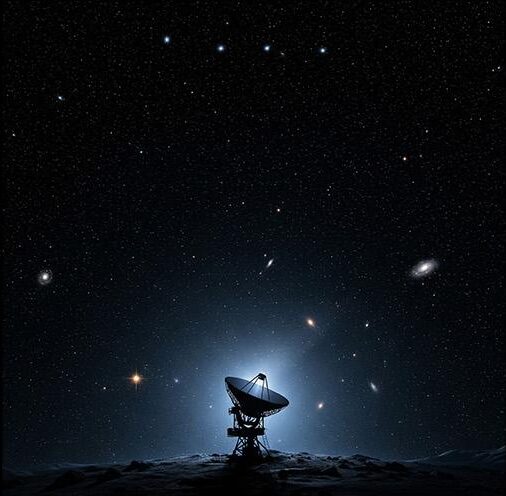
Where is everybody? The universe is enormous and billions of years old. Many estimates suggest it should be full of other civilizations. Yet the sky is silent. This is the Fermi paradox, and it has puzzled scientists for seventy-five years. Now look at how we search. We point radio telescopes into space and listen for bodies in spacetime sending signals we can decode. That assumes any other intelligence must live inside our interface, in our kind of physical world. But if spacetime is a headset, that is the one place we should not expect to find most of what exists. We would be looking for others inside our own rendering. Meanwhile, the network beyond it stays completely invisible. And according to this theory, that network holds most of what exists, outside space and time altogether. Even the emptiness of space may be a feature of the headset: not a void, but the places where our interface renders nothing. The ladybug can scan her world forever and never find the person she is standing on. What if the sky isn't empty? What if we are simply listening on the wrong channel?
Can we carry consciousness to the stars? It's a magnificent ambition. Under the inversion, it is upside down. Go back to the desktop. The stars, the galaxies and the distances between them are icons on it: features of the human headset, rendered when we look. They are not a dark, empty container that consciousness has to cross and fill. In Hoffman's theory every icon stands for something real, but what a star stands for is not a ball of burning gas trillions of kilometers away. It is activity in the network of conscious agents, seen through our interface. So consciousness doesn't need to be carried anywhere. Every star a rocket could ever reach already appears within it. Rockets are still worth building, and I'm the first to love a good adventure: the icons are reliable, and the headset rewards taking them seriously. But spreading consciousness to the stars is like trying to carry your computer into the icons on its own screen.
And what could we build? Every great shift in science has brought new technology with it. A precise mathematics of experience could do for the mind what physics did for matter: let us model it, measure it and engineer it. It could point to physical phenomena the old picture never predicted. It could inspire computing architectures based on how observers actually work, rather than on a copy of the brain, which is itself only an icon. And it could change what we mean by intelligence. Today we treat intelligence as something matter achieves late: first in brains, now in chips. Hoffman's theory suggests the reverse. Intelligence may be an organizing principle of reality itself, at work before spacetime, matter or evolution. Every observer would be that principle running inside one particular window, learning to minimize surprise within its own interface. If so, today's AI race has been copying the shadow. The next leap may come from building on the source: a new kind of intelligence, grounded in the mathematics of traces. It is early. But some of this is already being explored, and all of it becomes thinkable.
Spirituality
The Trace Institute is a science project. It has no spiritual agenda, and its claims stand or fall on mathematics and evidence.
But look at the picture its mathematics draws. The deepest layer of reality, the network of conscious agents, sits entirely outside space and time, and cannot be reduced to anything inside them. Observer and observed are not separate: every observer is part of what it observes. Hoffman even wonders whether all of it is, in the end, one. What if science could begin to map the invisible, the beyond? Not see it whole, but catch its shadow: a first glimpse, drawn in mathematics rather than taken on faith.
And here is the strange part. For thousands of years, contemplative traditions, Vedanta, Buddhism, Daoism and the mystics of every culture, have said something that sounds very close: that consciousness comes first, that the division between self and world is not fundamental, and that the world of separate objects is an appearance. Teachers such as Rupert Spira and Swami Sarvapriyananda put it with great precision today.
They arrived there by looking inward. Trace arrives from evolutionary game theory and the mathematics of observation. Two completely different roads, pointing to the same place. Resemblance is not proof. But it is hard to ignore.
If Trace succeeds, it offers something new: a precise language in which old questions can be asked properly. Are the Buddhist teaching of no-self and the Vedantic teaching that the self is the absolute really in conflict, or saying the same thing in different words? Is free will real at the level of the network? The traditions have debated these questions for millennia. Mathematics could make them sharper.
Sailing past the interface
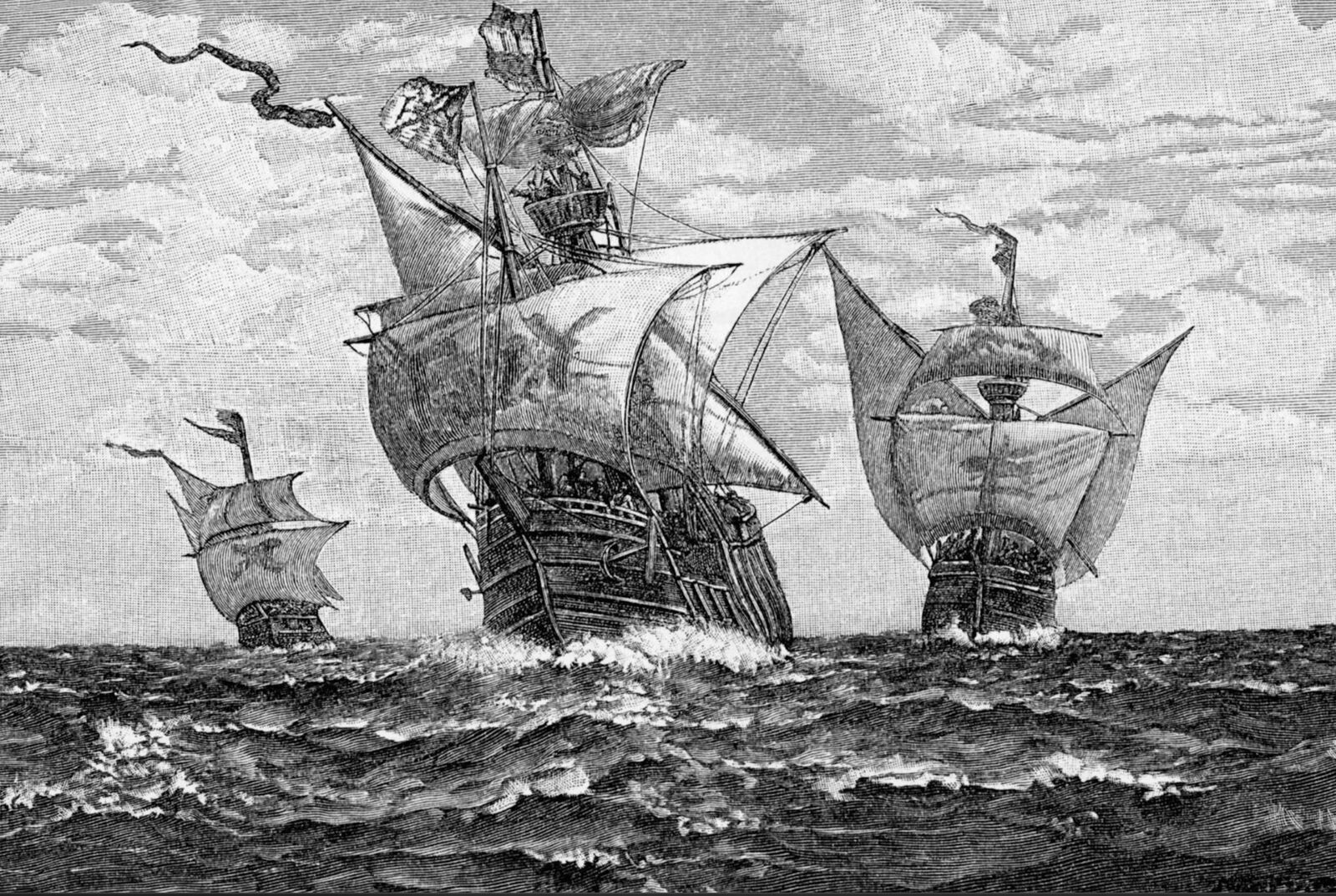
Five hundred years ago, ships sailed west looking for a shortcut to India. They found something nobody had imagined: a whole continent that had been there all along, just past the edge of the map.
We think the age of exploration is over, or that its next chapter is rockets and planets. Maybe. But if Trace is right, there is a frontier no rocket can reach, because it isn't anywhere in space. It is what lies on the other side of the membrane.
If the physical universe, from the Big Bang to the farthest galaxy, is the trace of something larger, then our exploration has barely started. The map we inherited isn't wrong. It's the coastline.
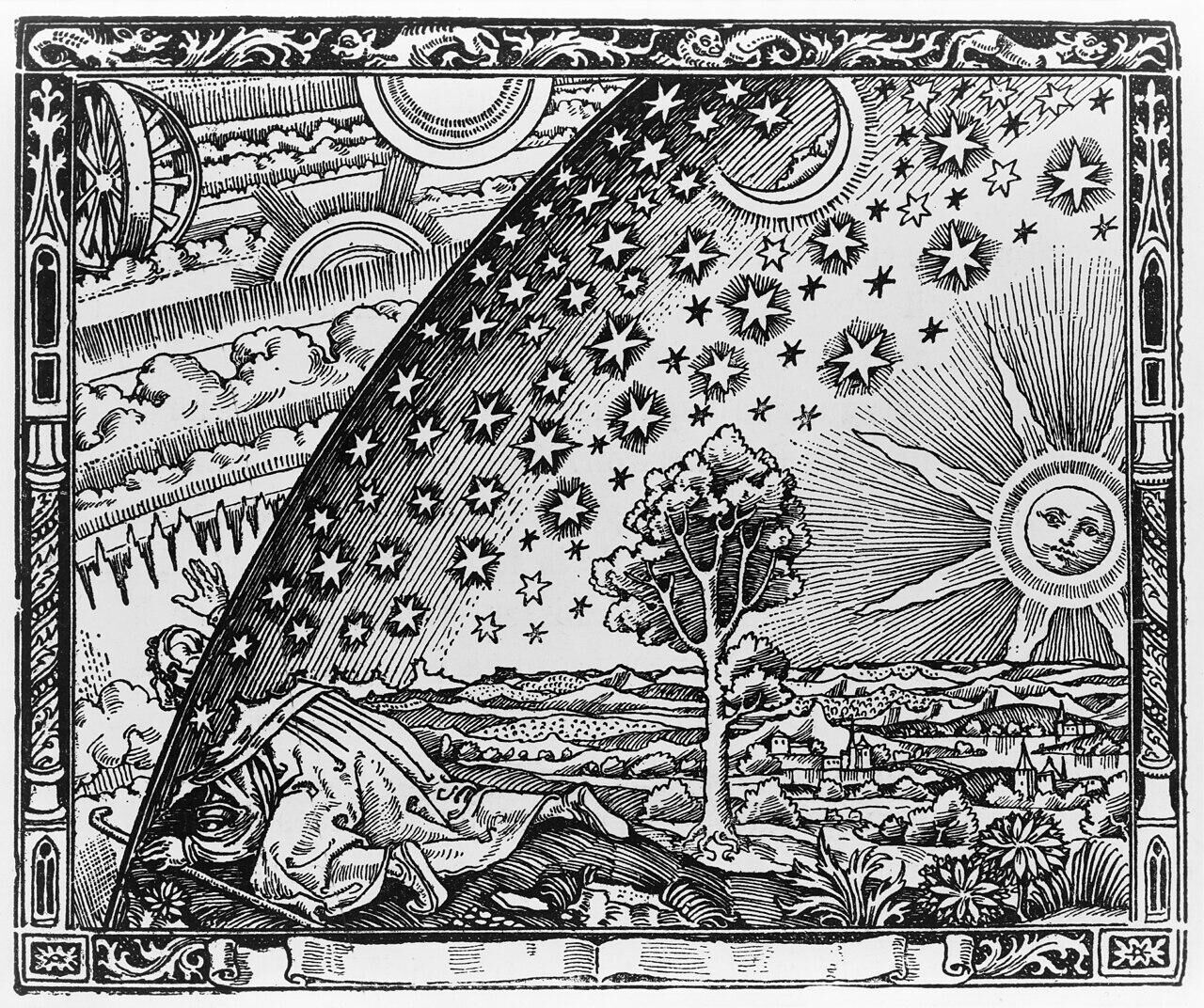
That is what the Trace Institute is: a team trying to draw the first accurate chart of what lies past the coast. Not with stories. With mathematics anyone can check, and predictions that can fail.
They may be wrong. If they are, we will know, and we will have learned exactly where the old picture holds. If they are right, the textbooks get rewritten, the hardest problem in science gets a new form, and humanity's oldest questions, about what we are, what dies and who else is out there, get a new kind of answer.
Either way, the question can no longer be ignored.
Think of what that would mean. The hardest problem in science, the one no theory has touched, could finally be asked the right way round. The edges of physics, black holes, dark matter, the first instant of time, could stop being walls and become doors. Every creature we ranked below us could turn out to be something we have never actually seen. And you, reading these words, would no longer be an accident that happened late in a dead universe. You would be a window, one of countless windows through which reality looks at itself.
Mystics and shamans have always said the headset can come off, and that they have seen what lies beyond it. Science has never had a way to follow them there. Now it might: by knowing that we are wearing a headset, and studying how it is built. Not with telescopes, but with a better question, and with mathematics precise enough to answer it, or to prove it wrong.
Every age gets one great frontier. Ours may be the one that was closest all along.
What if we are the ladybug?